

Advancing Bioethics and Medical Humanities
In this Q&A, Kelly Michelson, MD, MPH, director of the Center for Bioethics and Medical Humanities in the Institute for Public Health and Medicine, shares how ethics and the humanities are shaping the future of medicine, driving research and redefining medical education.
What is the mission of the Center for Bioethics and Medical Humanities?
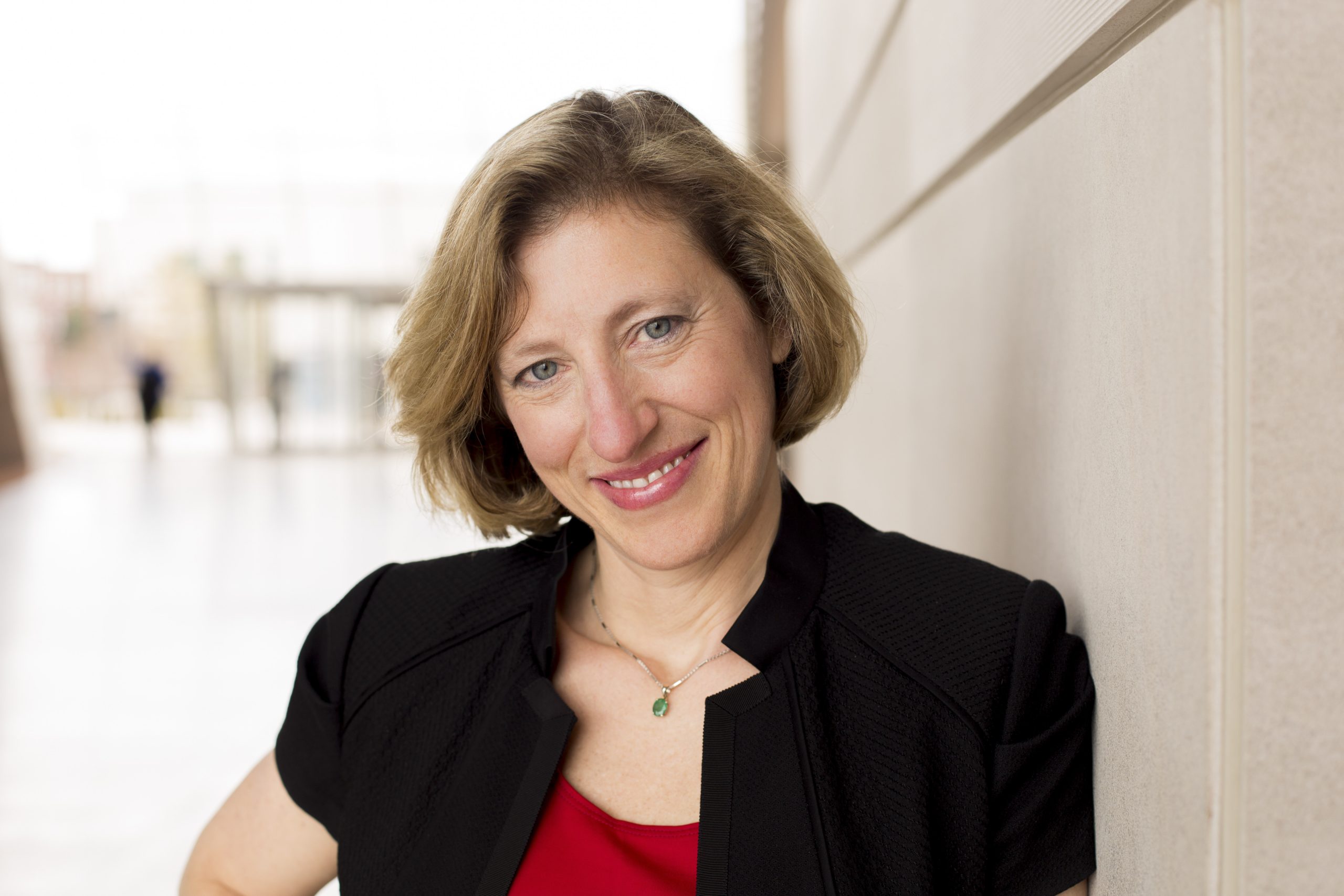
The mission of the center is to advance bioethics and medical humanities in the modern, diverse, expanding healthcare environment through education, application, innovation and thought leadership. The center addresses cross-cutting topics that affect all areas of healthcare and all populations. We uniquely do this by engaging experts not only in medicine and science, but also in a broad array of disciplines, including philosophy, history, anthropology, and the law. The tools of bioethics and medical humanities draw not only from the skills required of clinicians but also from those of writers, artists and philosophers. The center brings together both the scientific and human aspects of what is required to provide high-quality healthcare, to prevent disease, and to foster well-being.
How does the center integrate ethics and humanities into biomedical research and medical education?
Northwestern integrates ethics and medical humanities into education across the spectrum of learners. During the first two years of medical school, students are exposed to the fundamentals of bioethics as well as insights from a variety of disciplines, including literature, law, history and more. In the last two years of medical school, learning is tied to the students’ clinical experiences, using real cases encountered during their clerkships as a starting point for discussion. For those interested in more in-depth learning, there are multiple options. The center offers a two-year scholar program in clinical bioethics designed for residents and fellows and available to all healthcare professionals. This program offers an overview of clinical bioethics and opportunities to incorporate learning into clinical work. For those interested in an even deeper exposure, the center offers a master’s program in Medical Humanities and Bioethics which uniquely highlights the disciplines of philosophy, history, anthropology, literature and the law and their unique role in healthcare.
The center also sponsors an annual conference providing an opportunity for anyone to learn more about scholarship and research at the intersection of healthcare and bioethics. This conference is one way the center supports the research endeavor at the medical school. Research is also supported by centers through funding for investigators whose work directly focuses on the study bioethical issues, such as research to understand the ethics of complex healthcare issues like challenge trials or organ transplantation. The center also works with investigators across the medical school and Northwestern to consider ethical issues that arise in the context of a particular research program, such as the issues associated with developments in artificial intelligence or advances in genomics and other biological sciences.
What inspired the creation of the center, and how has its role evolved over time?
The center was created to build a “home” where people across the medical school and Northwestern community can convene and collaborate in service of advancing understanding, knowledge, and clinical support for medical humanities and bioethics. That continues to be a guiding principle and goal for the center. Over time, it has been interesting to see how the center has engaged with new groups on previously unforeseen topics. For example, advancements in artificial intelligence in healthcare and the introduction of the Institute for Artificial Intelligence in Medicine have prompted the center to expand its reach and create collaborations with people in disciplines like computer science and informatics. I wouldn’t have expected 10 years ago that some of my most interesting collaborations would include people in these disciplines.
What drew you personally to the field of bioethics and medical humanities?
As a pediatric intensivist, I have the challenging responsibility and privilege to support patients and families during some of the most difficult experiences of their lives. In these sensitive moments, good healthcare and good decision-making need to be grounded in thoughtful human interaction and account for the subtle, complex challenges that such interactions create. It is often during these situations that difficult ethical questions arise. How can we do this well? How can we make reasonable decisions in the face of uncertainty? What is the “right” thing to do when the data and existing evidence provide unclear answers or when multiple people are impacted in different ways? These are the questions that really drew me to the field of bioethics and medical humanities.
What are some of the issues in healthcare today that the center is actively investigating?
Healthcare is ever-changing. With new therapies, emerging infections, and novel technological advances come new issues and ethical conundrums. At the forefront of many conversations today are topics related to the use of artificial intelligence in medicine, new strategies in organ transplantation, allocation of scarce resources, changes in professionalism, and disparities in healthcare utilization, availability and outcomes. These are some of the key topics of focus for the center.
How can investigators, students and trainees get involved with the center and its work?
There are multiple opportunities to get involved in the center. For people interested in educational opportunities, I encourage you to look into the scholar program in clinical bioethics or master’s program in Medical Humanities and Bioethics. You can also take a look at our website for information about upcoming talks, including our Montgomery Lectures series, which features a range of presentations about healthcare from the perspectives of people in the medical humanities and clinical professionals. Another option is to attend our annual conference. This year the theme of our conferences is “Boundaries.” We are accepting abstract proposals for the conference through December 15, 2025. Anyone is welcome to attend the conference itself on April 13, 2026. For investigators, we provide small grants for pilot and exploratory research in general bioethics and artificial intelligence. The annual call for proposals is typically published on our website in the spring. Finally, if you are someone interested in engaging in conversation with people across the city and state who work in clinical bioethics, consider joining the Chicago Bioethics Coalition. The Chicago Bioethics Coalition meets monthly to discuss ongoing bioethical challenges and issues faced by local and statewide healthcare organizations.
What’s next on the horizon for the center?
The Center for Bioethics and Medical Humanities is celebrating its 10-year anniversary this year. As we mark this milestone, we are looking towards the future. The next decade will focus on collaborations and opportunities that bring people across the medical school and broader Northwestern community together for conversation and thought leadership. As the landscape of healthcare and medicine evolves, the center will lead efforts to consider the impact of change, provide ideas for addressing the ethical concerns that arise, and introduce novel opportunities that draw from multiple disciplines, the arts, and humanities, to improve patient care and the health of all communities.
Legal Disclaimer:
EIN Presswire provides this news content "as is" without warranty of any kind. We do not accept any responsibility or liability for the accuracy, content, images, videos, licenses, completeness, legality, or reliability of the information contained in this article. If you have any complaints or copyright issues related to this article, kindly contact the author above.
